Whether you’re getting ready to propose or getting married, the classic question is: white gold or platinum? They both look almost identical to the eye, and you can’t really go wrong. But under the surface, there are some important differences worth knowing before you commit. Let’s break it down!
White Gold
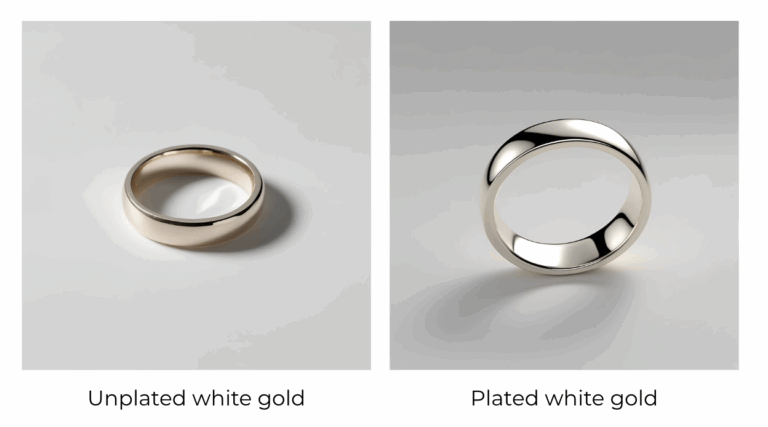
Think of white gold as the fashion friend who can pull off anything. It’s made by mixing pure yellow gold with white metals, such as palladium. In technical terms, it’s alloyed with other metals. It’s then finished off with a thin rhodium plating to give it a bright and silvery look. It’s a great choice for everyday wear, but with some upkeep to keep that “just bought” sparkle.
The exact alloy depends on the metal carat. For example, 18ct white gold is made of 75% gold and 25% palladium. Sometimes white gold can be made using nickel, but this can cause allergic reactions for people with super-sensitive skin, so always double-check with the manufacturer!
⭐️ Pros:
- Lightweight & comfortable: It’s less dense than platinum, which means it feels a bit lighter on the hand.
- Classic bright shine: The rhodium plating gives it that bright mirror-like finish everyone loves
- Durability: 14k & 18k White Gold is less malleable than platinum, making it a better option for everyday wear
❌ Cons:
- Touch-ups: Over time, the rhodium plating can wear off, and the ring can start to show a warmer tone underneath. Most people get it replated every 1–2 years to keep it looking fresh.
Platinum
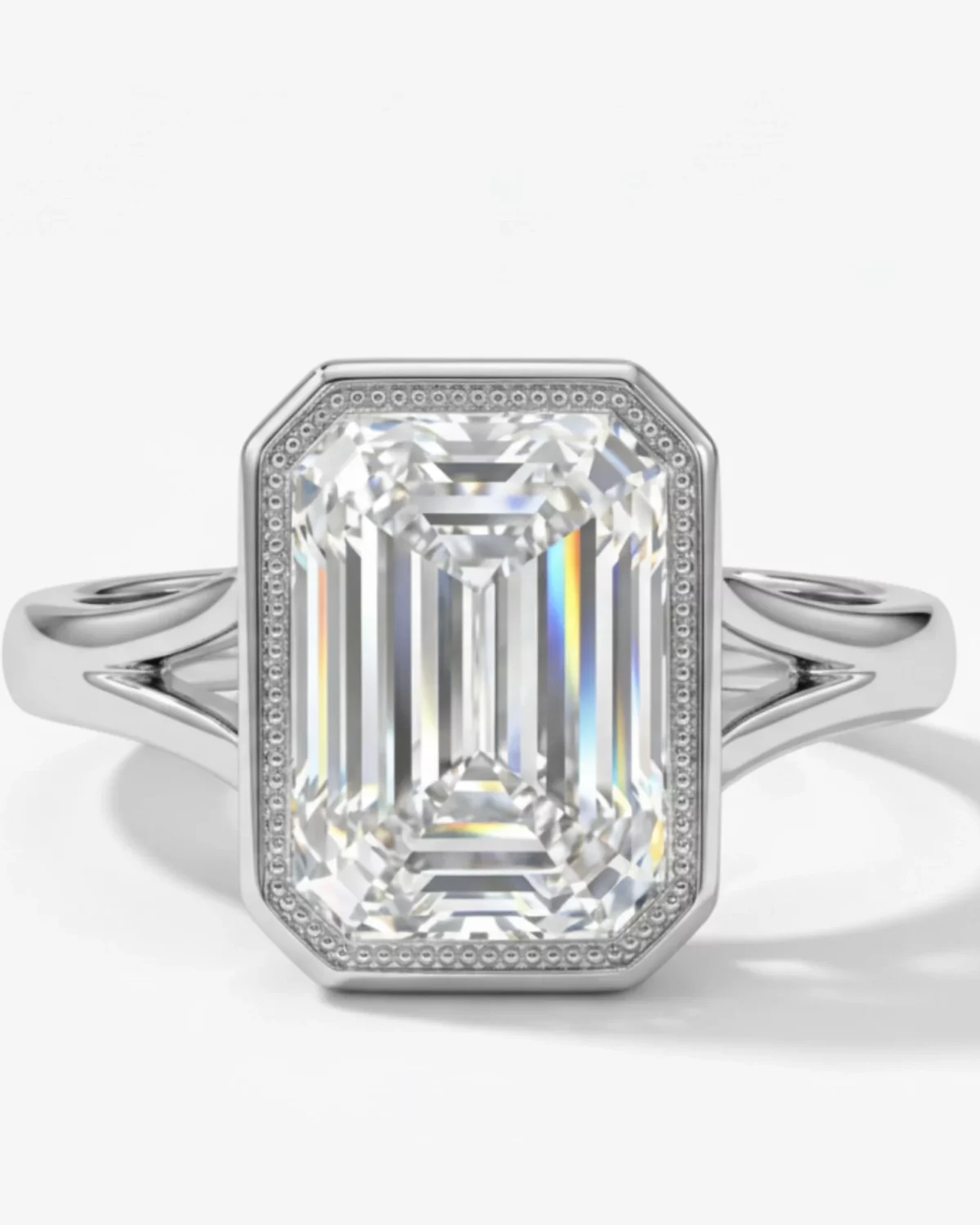
This metal is naturally white, meaning it doesn’t get a plating quite like white gold does. It’s dense and incredibly durable since it’s mixed with an alloy to strengthen it. It’s usually made of around 95% platinum and 5% palladium. The typical hallmark you’d see is ‘950’. There’s also a slightly cheaper ‘900’ platinum, which contains 90% platinum.
In fact, platinum is one of the rarest metals on earth (rarer than gold, which explains the expensive price tag) and is mostly mined in South Africa.
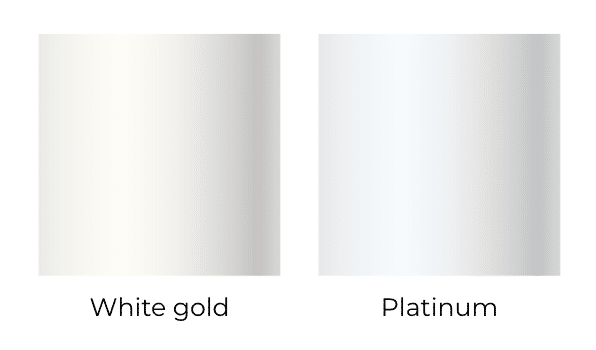
It’s got more of a cooler hue to it than white gold, which could suit some people’s skin tones more. The fact that it’s dense means it’s a bit heavier than white gold. Some find it luxurious, and some don’t.
⭐️ Pros:
- Naturally white: No plating needed. Platinum’s silvery colour is going to last without the occasional touch-ups. It also has a low reflection point, which can make your centre stone stand out even more and enhance sparkle.
- Durability that lasts decades: It doesn’t have a rhodium plating that can wear down the way white gold pieces do. When platinum scratches, the metal just shifts rather than flaking away — so you don’t actually lose material (even though it would be a tiny amount)
- Hypoallergenic: Because platinum is usually 95% pure, it’s a safe bet for sensitive skin.
❌ Cons:
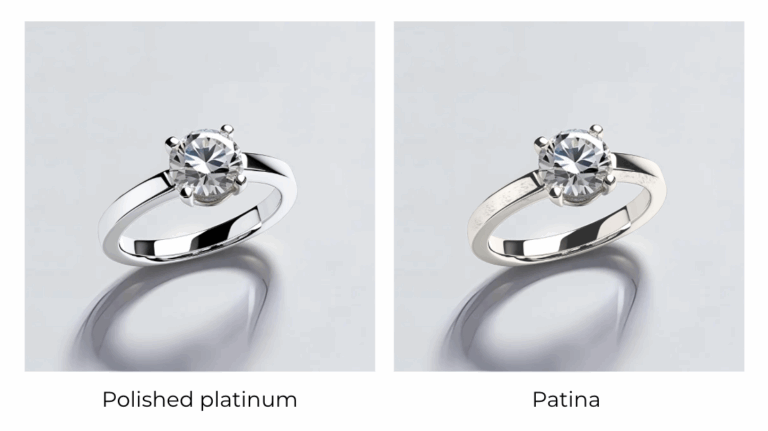
- Scratches show differently: Platinum develops a soft patina over time. Some love the vintage, lived-in look, but others prefer to polish it back to a high shine.
A quick breakdown
So what should you choose?
If you’re after a bright, shiny look and don’t mind a little upkeep, white gold could be your match. If you want something rare, weighty, and heirloom-level durable, platinum is calling your name.
At the end of the day, there’s no wrong answer. It’s about what feels right for you (and your budget). Both metals are timeless choices that will make your diamond sparkle beautifully for a lifetime.